

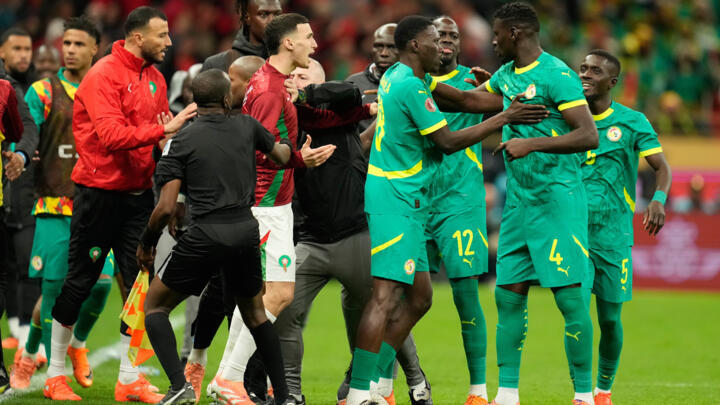
The Disciplinary Commission of the Confederation of African Football (CAF) announced the sanctions on Tuesday evening following the incidents that marred the Africa Cup of Nations final between Senegal and Morocco, held on January 18 in Rabat. All parties involved were heard the day before, on Monday, during a highly anticipated disciplinary hearing.
As expected, the CAF confirmed the main point: Senegal retains its continental title and remains fully qualified for the upcoming World Cup, putting an end to any attempts to challenge the Lions of Teranga’s victory. However, this validation did not stop the disciplinary body from imposing individual and financial sanctions primarily targeting the Senegalese camp.
Severe sanctions for Senegal and Morocco
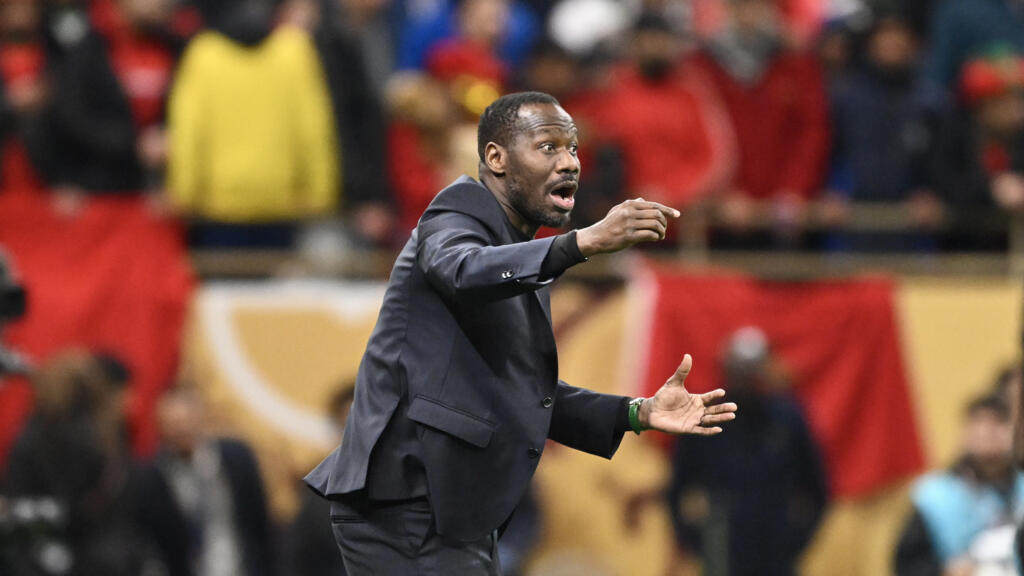
The national coach, Pape Thiaw, received a five-match suspension. This heavy sanction will keep him off the bench for the first five matchdays of the CAN 2027 qualifiers, potentially affecting the stability and technical continuity of the national team.
Two Senegalese internationals were also sanctioned. Ismaïla Sarr and Iliman Ndiaye each received a two-match suspension, based on the official reports from the final’s referee, Jean-Jacques Ndalla. Additionally, the Senegalese Football Federation (FSF) faces a hefty financial penalty, estimated at nearly 335 million CFA francs, significantly increasing Senegal’s disciplinary burden.
The Moroccan camp was not spared either. Achraf Hakimi was suspended for two matches, one of which is suspended, while Ismaël Saibari received a three-match suspension for “unsportsmanlike behavior,” according to the CAF’s ruling.
Serious prospects for Senegal’s appeal
In light of these decisions, Senegal now has avenues for appeal. According to current regulations, the FSF can appeal to the CAF Appeals Commission or even the Court of Arbitration for Sport (CAS) if it believes certain sanctions are disproportionate or insufficiently justified.
The chances of success on appeal seem real. The retention of the continental title and World Cup qualification clearly indicates that the CAF found no major collective fault against Senegal. Moreover, several sanctions are primarily based on referee reports, elements that could be contested or nuanced in light of video evidence or mitigating circumstances.
As for Pape Thiaw, a reduction in the suspension period seems possible if the defense can demonstrate limited involvement or an excessive interpretation of the facts. Similarly, the suspensions imposed on the players could be lightened or even partially lifted if solid and rigorously supported arguments are presented.
While a complete cancellation of the financial penalty seems unlikely, a reduction in its amount remains possible, similar to what has been observed in several previous disciplinary cases across the African continent.


