

At 39, Lionel Messi continues to write the history of world football. Settled at Inter Miami since 2023, the Argentine remains one of the top contenders for the Ballon d’Or 2026 thanks to his remarkable performances both at club level and with the Argentine national team during the World Cup. Despite leaving European football, his name still appears among the favorites with bookmakers, reigniting a recurring question: can a player in Major League Soccer really win the Ballon d’Or?
The answer is clear: yes. Contrary to popular belief, the rules of the Ballon d’Or no longer require candidates to play in a European league. For several years now, all professional footballers, regardless of their country or league, can aspire to the award given by France Football.
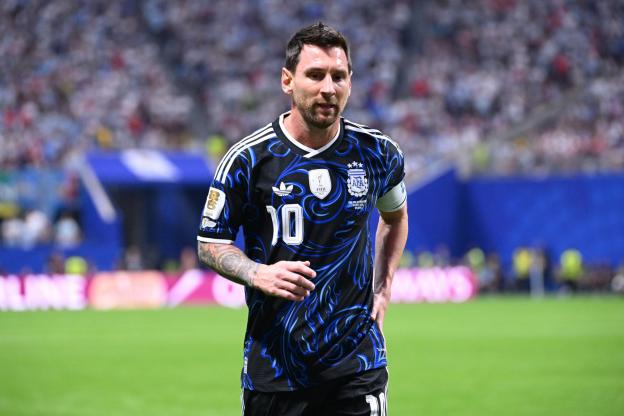
This confusion stems from the trophy’s history. When it was created in 1956, the Ballon d’Or was exclusively for European players. This rule remained in place until 1995, when players of all nationalities became eligible, provided they played in a European league.
Between 1995 and 2006, an African, South American, or Asian player could win the Ballon d’Or, but only if they played in Europe. Starting in 2007, that restriction was lifted. Since then, all professional players are eligible, no matter what league they play in.
A new reform came in 2022. Now, the Ballon d’Or rewards performances over a sports season rather than a calendar year. Voters mainly consider three criteria: individual performances, collective results, and exemplary behavior on and off the pitch.
In recent weeks, organizers have publicly reminded everyone that no rule prevents a player outside Europe from winning the Ballon d’Or. In theory, a footballer from MLS, the Saudi league, South America, or Asia can absolutely be crowned if their performances are deemed superior to their competitors.
Lionel Messi is the best example. In 2023, he became the first player in history to win the Ballon d’Or while belonging to an MLS club, Inter Miami. His victory was mainly based on his incredible World Cup 2022 with Argentina and his first half of the season at Paris Saint-Germain, but his transfer to the U.S. never posed a regulatory obstacle.
This experience shows that playing in MLS doesn’t close any doors. The real challenge lies elsewhere. It’s primarily sporting. Major League Soccer remains a less competitive league than the Premier League, La Liga, Bundesliga, Serie A, or the Champions League, which is still the benchmark competition in the eyes of many observers.
Journalists who vote often place particular importance on performances in major European matches. Players who shine week in and week out against the continent’s best teams naturally gain more visibility, which can influence votes.
For a player outside Europe, it’s essential to compensate for this lack of exposure with exceptional performances in international competitions. A World Cup, Copa América, or another major tournament can significantly alter the hierarchy in the race for the Ballon d’Or.
This is precisely what could work in Lionel Messi’s favor this year. His journey with Argentina during the 2026 World Cup could weigh heavily in the final vote. If he leads the Albiceleste to another world title or has an exceptional tournament, his candidacy would naturally gain credibility.
However, the competition remains fierce. Several European football stars are also having a top-notch season. Harry Kane, Kylian Mbappé, Lamine Yamal, and Ousmane Dembélé are among the main contenders and have the advantage of playing weekly in the most high-profile competitions.
These players rack up performances in the Champions League and major European leagues, two showcases that regularly influence journalists’ votes. Messi will need to deliver an exceptional season to compete with rivals who enjoy constant exposure at the highest level.
🚨🚨 LIONEL MESSI 🇦🇷 IS NOW THE BOOKMAKERS’ FAVORITE TO WIN THE BALLON D’OR 2026 !!!!! 🌕🤯 pic.twitter.com/XpS6K62HWD
On the regulatory side, the debate is already settled. Nothing prevents Lionel Messi from winning the Ballon d’Or in 2026 while playing for Inter Miami. For nearly twenty years, the rules set by France Football have allowed all professional players, regardless of their league, to be recognized.
The real challenge lies solely on the pitch. If Messi can maintain an exceptional level of performance with his club while delivering a memorable World Cup with Argentina, he will have strong arguments to claim a historic ninth Ballon d’Or.
In other words, it’s not his move to MLS that could stop him from being crowned, but rather the ability of his rivals playing in Europe to have an even more impressive season. As is often the case in the race for the Ballon d’Or, everything will come down to performances in the biggest matches.


