

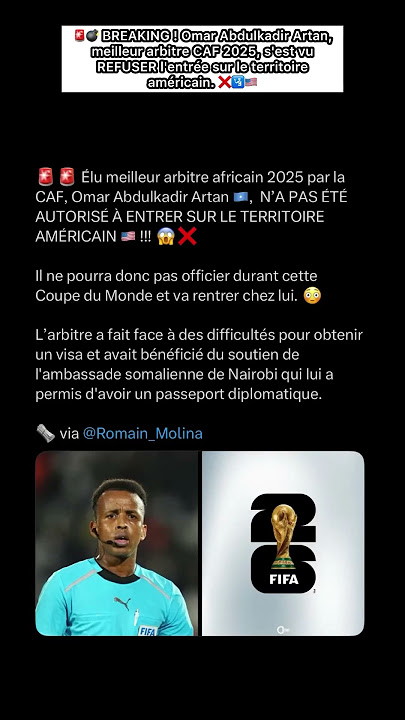
Somali international referee Omar Abdulkadir Artan, selected for the 2026 World Cup, will not participate in the tournament following an incident upon his arrival in the United States. According to multiple sources, the official was turned away at Miami airport and redirected to Istanbul, despite holding a valid visa.
This surprising situation comes just after the FIFA announced the list of referees for the upcoming World Cup. Artan was among those chosen to officiate matches in the tournament, which will be jointly hosted by the United States, Canada, and Mexico. This incident raises many questions about the entry procedures for official delegation members into the United States.
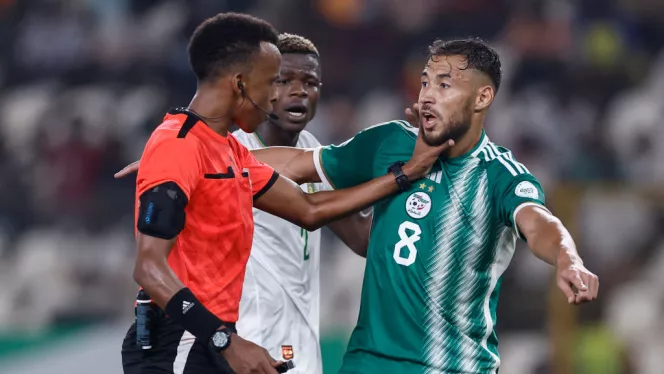
Omar Abdulkadir Artan had all the necessary documents. He held a visa issued with support from the Somali diplomatic authorities in Nairobi. Additionally, he was traveling with a diplomatic passport, which typically eases entry into most countries hosting international competitions. Despite this, U.S. border services decided to deny him access, with no official explanation provided at this time.
The recent career of the Somali referee makes this episode even more significant. He was recognized by the Confederation of African Football (CAF) as the Best African Referee of the Year 2025, a major acknowledgment of his performances on the continent. He was also selected to officiate high-profile matches, including the second leg of the African Champions League final between Pyramids FC and Mamelodi Sundowns, a designation that reflects the trust placed in him by continental authorities.
The Miami incident is part of a broader context marked by administrative and logistical tensions surrounding the organization of the 2026 World Cup. Several delegations have reportedly faced difficulties traveling to the United States, sparking discussions within international sports bodies. Cases of restrictions or delays in processing certain applications have been mentioned in recent months, although no overall pattern has been officially confirmed.
In this climate, some situations involving national teams have also been reported, including administrative complications affecting members of various teams upon their entry into the United States. These episodes fuel a broader debate about coordination between the tournament’s organizing authorities and the immigration services of the host countries.
With just a few months until the competition begins, this incident involving a top referee could reignite discussions about the smoothness of welcome procedures and the administrative preparation of teams and officials. In the absence of detailed communication from the relevant authorities, the matter remains shrouded in uncertainty, adding to a series of questions about the organization of the upcoming World Cup.


