

Samuel Eto’o has spoken about the rise of Moroccan football, stating that Morocco’s current status can no longer be evaluated by the usual standards of African football. According to him, the recent journey of the Moroccan national team reflects a deep structural evolution that goes beyond the continental framework and now demands a global perspective. This analysis is based on the recent performances of the national team and its ability to establish itself sustainably at a high level.
In his remarks, the former Cameroon international believes that comparing Morocco to other African teams is gradually losing relevance. He argues that the criteria for judgment need to be reassessed, as the Atlas Lions have crossed a significant threshold in terms of competitiveness and consistency. While several African teams still oscillate between remarkable feats and inconsistency, Morocco stands out as a team that has maintained a continuity of results against top-tier opponents.
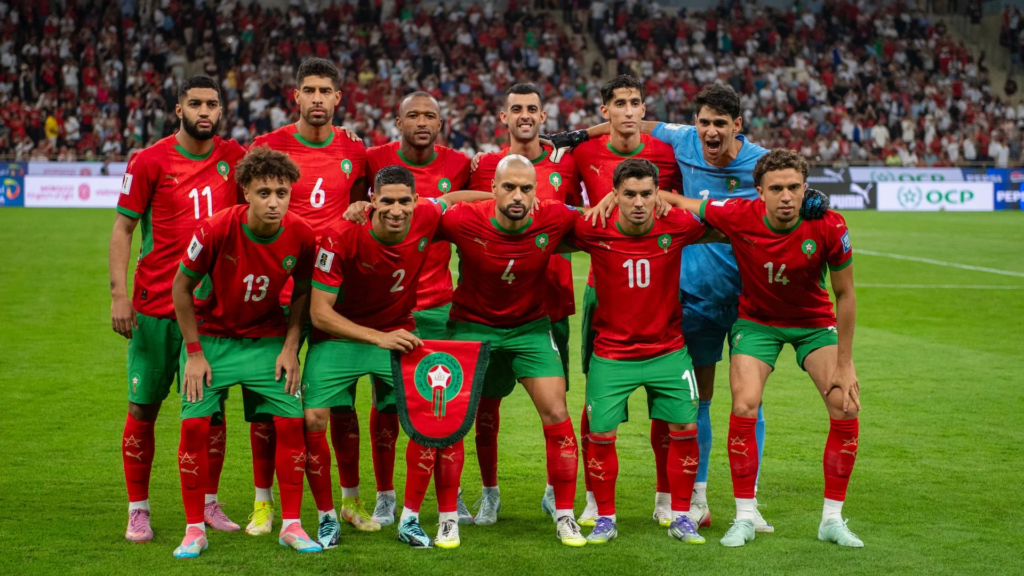
This evolution is generally linked to a comprehensive transformation of Moroccan football, marked by the structuring of training centers, increased professionalism in the local league, and the integration of players competing in top European leagues. This combination has allowed the national team to develop a more stable playing identity, capable of adapting to different styles of opponents. Recent performances in international competitions have also reinforced this perception of a shift in dimension, especially during major global events where Morocco has managed to compete with historically dominant nations.
For Samuel Eto’o, this dynamic places Morocco in a different category, where the reference point is no longer just continental but global. The team is now seen as capable of measuring up to the international elite, not just in isolated matches, but over a series of competitions. This consistency in performance is, according to this analysis, the main indicator of moving to a higher level, where many African teams still struggle to maintain this pace over time.
🎙️| Samuel Eto'o 🇨🇲 talks about Morocco:
Comparing Morocco to other African teams no longer makes sense, the Atlas Lions have surpassed that level and now compete with the global elite.
➖ @SamuelEtoo pic.twitter.com/XEay46kt35
— Zone FRMF 🇲🇦 (@ZoneFRMF) July 1, 2026
Finally, this perspective emphasizes that Morocco has entered a phase where expectations are no longer the same. The ambitions are now aligned with those of the great footballing nations, with goals of reaching the final stages of major competitions. In this context, traditional benchmarks of African football seem insufficient to measure the level achieved. Morocco is thus presented as a team in transition towards global recognition, confirming an evolution that redefines its place in the international landscape.


