

Recent reports about the Senegal national team reveal new internal tensions in a sporting context already marked by results deemed insufficient during the last World Cup. Several sources mention disagreements related to hierarchy and role distribution within the group, highlighting a management of collective balances that has become a central issue internally.
These elements come primarily from publications by journalist Romain Molina, who is often cited for his investigations into African teams and their internal workings. According to his insights, certain group dynamics are being weakened by differing perceptions regarding the importance of certain players in the tactical setup. While these details have not been officially confirmed by the federation or the coaching staff, they are fueling debates about the stability of the Senegalese locker room.
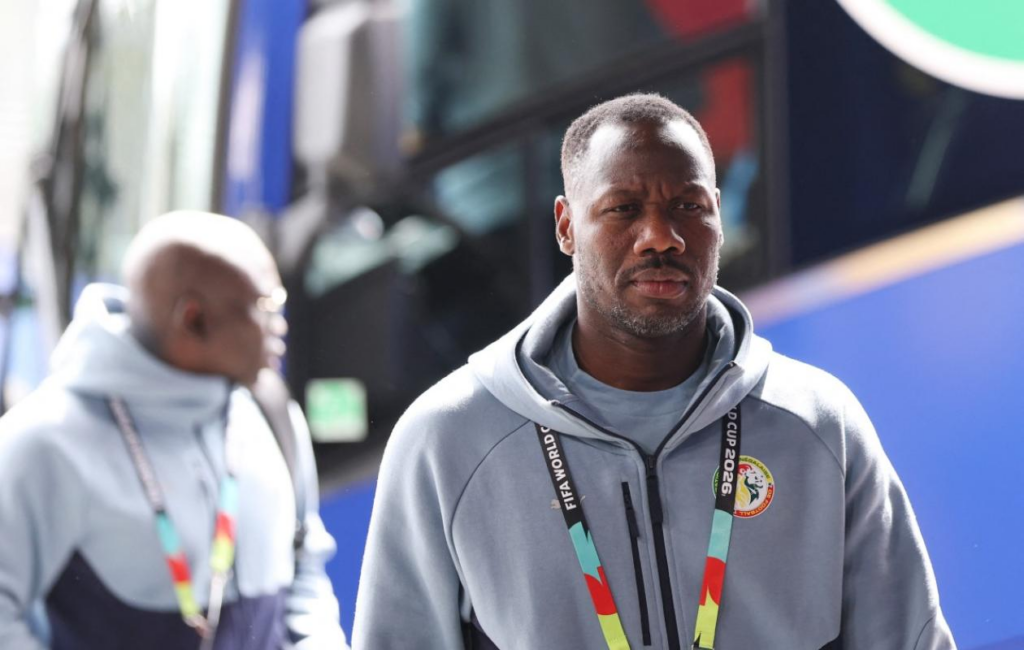
In this context, midfielder Lamine Camara is seen as a player aware of his growing role in the game. His performances at AS Monaco are strengthening his position in the eyes of the coaching staff and in his own view of his status. This evolution is seen as a factor for readjustment in the midfield hierarchy, where competition remains particularly fierce. Disagreements about his tactical positioning and influence in building the play have reportedly emerged in some internal discussions.
On his part, forward Nicolas Jackson also occupies a central place in these revelations. Trained in Senegal and now playing in the Premier League, he is considered a determined player looking to establish himself firmly in the Lions’ attacking line. His status as a player in a major European league boosts his ambitions within the squad, where competition for attacking positions is high. Some internal discussions suggest necessary adjustments to clarify responsibilities in the attack.
🚨🚨 PAPE THIAW SHOULD NOT CONTINUE COACHING SENEGAL 🇸🇳 !!! ❌
He should not survive the Lions of Teranga’s failure during the World Cup.
🗞️ @lequipe pic.twitter.com/2DvfTXXNnK
— Actu Foot (@ActuFoot_) July 3, 2026
Beyond individual cases, these elements fit into a broader dynamic questioning the balance of the national team. After a World Cup marked by inconsistent performances, managing young talents and integrating experienced players appears to be a key issue for the future of the sporting project. Tactical choices and defining roles within the group continue to fuel reflections on collective cohesion and locker room stability.


