

For a former official of the African Football Confederation, the decision to change the Africa Cup of Nations from a biennial to a quadrennial event feels like a real gamble… even a financial “suicide.”
A month and a half earlier, just before the opening match of AFCON 2025 in Morocco, CAF president Patrice Motsepe shocked everyone by announcing this major change: starting in 2028, the Africa Cup of Nations will no longer be held every two years, but every four years.
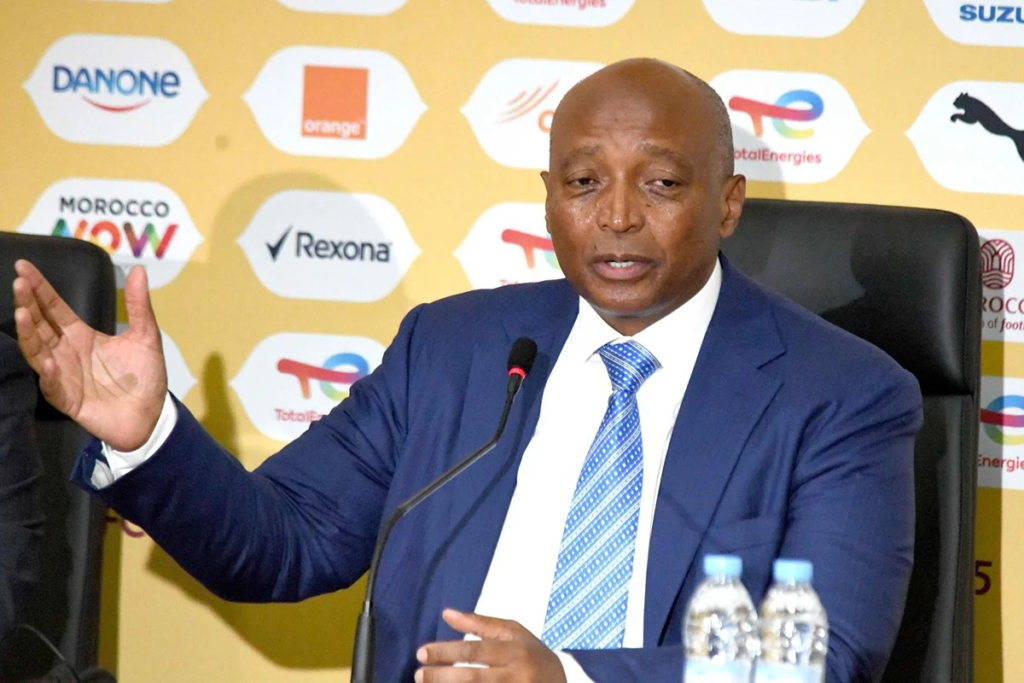
An “economic suicide” according to Junior Binyam
In an interview with Le360 Sport, Junior Binyam, former communication head and ex-chief of staff to the CAF secretary general, raised serious concerns about the financial implications of such a reform.
“On feasibility, there’s no debate. If AFCON can be held every two years, it can also be held every four years. The real question is the foundation of this decision. Is there a study showing that moving to a four-year cycle would allow CAF to generate more resources? (…) It’s worth noting that about ten years ago, AFCON represented around 40% of CAF’s revenue. And I’m not sure that figure has fundamentally changed.”
He believes that cutting the frequency of the continent’s main competition in half, without a clearly identified financial alternative, could destabilize the economic balance of the organization.
“Switching to a four-year cycle could look like economic suicide if it’s not backed by clearly identified alternative revenue sources. I haven’t conducted a study on this, but I have serious doubts about the ability to nearly double African football’s revenue just by changing the frequency of AFCON.”
An African Nations League still very vague
To offset this potential loss, CAF has mentioned creating an African Nations League. For now, this announcement raises many questions.
“If someone presents me with a study showing that this competition will compensate for the revenue loss caused by moving to a four-year cycle, the debate is over. But for now, no one explains how it will be organized, funded, or structured.”
In this context, some observers see this new competition as a sort of “African Super League” still lacking clear outlines, while AFCON remains the financial backbone of African football.
In public opinion, including Junior Binyam’s, many fear that this future competition will meet the same fate as the African Super League, which left a bitter taste. Launched with a bang, it only had one edition… before disappearing from the radar.
Another concern is the return of AFCON to even years. This calendar shift would directly expose the tournament to fierce competition with major events like the Euro or the Olympics, especially in the broadcasting market.
“We can’t separate the move to four years from the issue of calendar alignment. Can we reasonably think that a European broadcaster will prioritize an AFCON match over a Euro match? I seriously doubt it.”
For Binyam, the debate goes beyond the frequency of the competition. It touches on its international visibility, commercial attractiveness, and, implicitly, CAF’s ability to maintain the value of its flagship product against increased global competition.


