

Turkey’s campaign at the 2026 World Cup ended brutally and prematurely, with an elimination in the group stage after just two matches. Unable to assert themselves in a group that was deemed manageable, the Turkish team leaves the competition without scoring a single goal, a particularly worrying record for a squad that had higher ambitions. This quick exit marks a significant setback for Turkish football, which hoped to confirm the progress made in recent years on the international stage.
After the final match, Arda Güler faced the media with a speech marked by clarity and responsibility. The young attacking midfielder wanted to send a clear message to the supporters, acknowledging the disappointment generated by his team’s performances. He spoke of a moral obligation to apologize, believing that the level displayed did not match the standing of the players involved in the competition. His remarks stood out for their measured tone, without excessive justification.
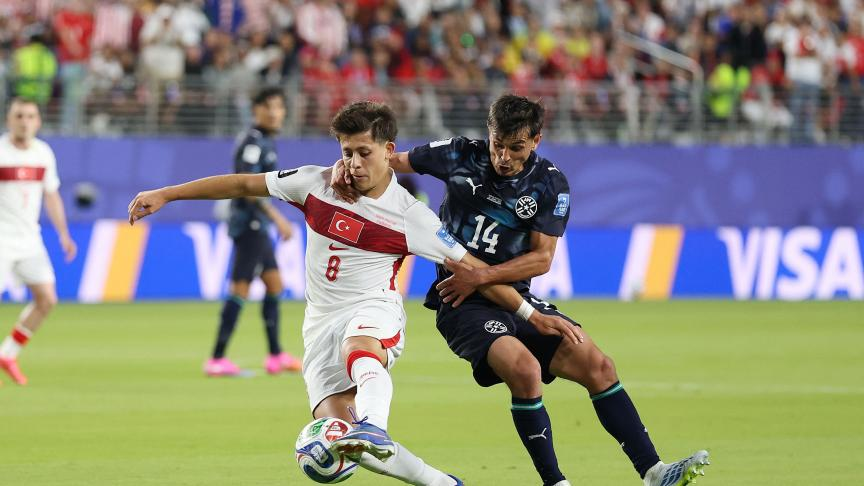
Offensively, the difficulties faced by the Turkish team were particularly evident throughout the tournament. In two matches, the team never managed to find the back of the net, illustrating a lack of efficiency in critical areas. The chances created were not converted, while coordination in the final third often fell short. This offensive sterility is one of the main reasons for Turkey’s early elimination, unable to compete in the key moments of the matches played.
In his analysis, the player also emphasized the gap between the individual potential of the group and the collective performances displayed.
Most of the Turkish internationals play for top European clubs, so they were expected to perform at a higher level. The attacking midfielder acknowledged this contradiction, highlighting that the overall output did not reflect the theoretical quality of the squad. He expressed his desire to turn this disappointment into a starting point for collective reflection, without seeking to individualize the responsibilities.
🚨🚨 ARDA GÜLER AFTER TURKEY’S ELIMINATION 🇹🇷 🤯:
“We want to apologize, we are ashamed. 💔
We all play for top-level clubs and we should do much better in this competition.
“In two matches, we scored no goals and that’s… pic.twitter.com/Ay8lW29gt7
— BeFootball (@_BeFootball) June 20, 2026
Finally, this elimination leaves a mixed impression for a generation presented as promising. Absent from the World Cup for 24 years before this edition, the Turkish team hoped to mark its return with a significant performance. The final assessment, however, is one of a failed campaign, marked by a lack of realism and efficiency. The future of the team will now depend on its ability to learn from this failure, with high expectations around its young leaders to reignite a more competitive dynamic in upcoming international fixtures.


