

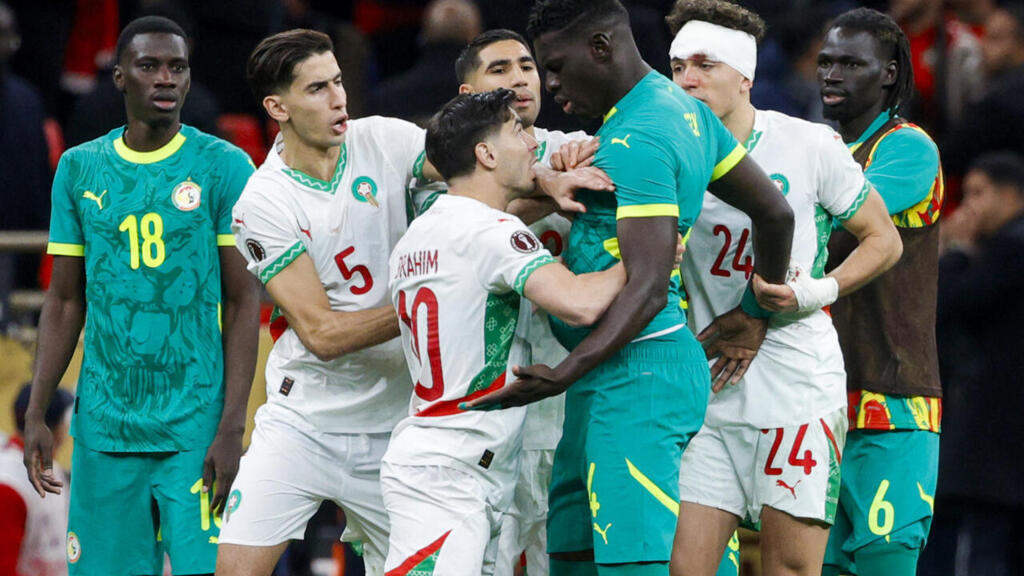
Several months after the 2026 Africa Cup of Nations final between Senegal and Morocco, a match that was interrupted for long minutes amid high tension, new details shed light on an episode that remained open to interpretation for a long time. This encounter, marked by an electric atmosphere and incidents that led to a temporary suspension of play, raised numerous questions about the decisions made off the pitch and external interventions during that time.
In an interview with influencer Cheikh Senghor, El Hadji Diouf detailed a specific moment that caught the attention of observers: his presence on the sidelines, phone in hand, at the time of the match interruption. The former Senegal international explained that he was called upon in a particularly tense context, as players were still in shock from the events that caused the temporary halt. According to his account, direct exchanges took place to try to facilitate the resumption of play under normal conditions.
The former Lions striker clarified the nature of this call, indicating that he was in communication with former Senegalese president Macky Sall.
He claims that Sall was closely monitoring the situation and wanted a quick resumption of the match despite the circumstances. In this context, El Hadji Diouf reported the following words: “I was on the phone with former President Macky Sall who asked me to tell the players to return to the field,” he shared, reflecting on a moment of intense institutional and sporting pressure.
Continuing his account, the former player specified the message conveyed by the former president to the match participants. According to him, the position was clear and emphasized the need not to definitively abandon the match despite the observed tensions. He relayed these words: “They must not give up. Tell them to get back on the field. And we cannot lose this match.” This statement illustrates, in his interpretation, the desire to see the final reach its conclusion in a spirit of sporting continuity.
This episode continues to fuel debates about crisis management in major international competitions. El Hadji Diouf’s revelations provide additional insight into the interactions between sports figures and political leaders in sensitive contexts. They also highlight the unique intensity of this final, where the sporting stakes were intertwined with external considerations, further enhancing the symbolic significance of this match in the recent history of Senegalese and African football.
🚨 El-Hadji Diouf 🇸🇳 : « I’VE ALWAYS TOLD MYSELF I WAS THE BEST, THE MOST BEAUTIFUL. 😁
I wanted to be the PHENOMENON OF THE FUTURE. And there’s no phenomenon of the future who doesn’t love the spotlight. I’VE ALWAYS WANTED TO BE IN THE LIMELIGHT. 🤩
Without that, where would I be? Again… pic.twitter.com/8xBdNvTabC
— Actu Foot (@ActuFoot_) June 14, 2026


