

Who could have imagined such a twist? Humiliated by Sweden (5-1) in their opening match of the 2026 World Cup, Tunisia made a radical and unexpected decision to part ways with Sabri Lamouchi and immediately hand the reins of the national team to Hervé Renard. This spectacular change of direction has sparked immense hope among Tunisian supporters: the dream of seeing the Eagles of Carthage achieve the unthinkable and secure a historic qualification for the Round of 16.
Coaching changes during the World Cup are extremely rare. Seeing them happen after just one match is even rarer. But after the magnitude of the disaster against Sweden, marked by a series of defensive errors, a glaring lack of response, and a team completely overwhelmed, Tunisian officials felt there was no time to waste.
To avoid an early exit, they opted for one of the most renowned coaches on the African continent. A two-time Africa Cup of Nations winner with Zambia and then Ivory Coast, former coach of Morocco, Saudi Arabia, and the French women’s team, Hervé Renard has built a reputation as a specialist in commando missions and unexpected feats.
A Group in Doubt
Beyond the heavy defeat to Sweden, it was the manner of the loss that sent shockwaves through Tunisian football. The officials didn’t just see a beaten team; they witnessed a squad completely overwhelmed in nearly every aspect of the game.
Individual errors piled up at an alarming rate. Goalkeeper Abdelmouhib Chamakh was directly involved in the first two Swedish goals, putting his team in a very complicated situation right from the start. Even the most experienced players were not spared. Captain Ellyes Skhiri, usually flawless in the Eagles of Carthage jersey, had a nightmarish evening, especially when an avoidable loss of possession allowed the dangerous duo of Alexander Isak and Viktor Gyökeres to score.
Defensively, Tunisia seemed to wobble with every opposing attack. There were plenty of gaps, duels were often lost, and coordination between the lines was virtually non-existent. Every Swedish acceleration seemed likely to lead to a clear chance. Offensively, the situation was hardly more reassuring. With only 0.83 expected goals generated throughout the match, the Tunisians failed to truly threaten their opponents.
But beyond the numbers and technical errors, it’s the mental state of the group that raises the most concern. Just days earlier, Tunisia had suffered a heavy defeat against Belgium in a warm-up match (5-0). The result: ten goals conceded in the last two outings and a seriously shaken collective confidence. The players appeared jittery, hesitant, and sometimes even resigned, as if doubt had settled in every sector of the team.
Lamouchi, a Tenure That Never Found Its Rhythm
In this context, Sabri Lamouchi’s departure seems almost like a logical consequence. Arriving at the helm after the elimination in the Round of 16 of the Africa Cup of Nations, the former French international never truly managed to convince either the supporters or a portion of the Tunisian public.
From his appointment, several controversies accompanied his arrival. Some criticized him for his choice, as a player, to represent France rather than Tunisia. Others questioned the presence of his son within the delegation or denounced possible interventions from the Federation in certain sporting decisions. All these elements created an atmosphere of distrust even before his first matches in charge of the Eagles of Carthage.
Yet, from a sporting perspective, Lamouchi’s project was not without logic. Keen to prepare for the future, he had embarked on a significant renewal of the squad, gradually turning the page on several historical figures. The goal was to launch a new cycle and build a team capable of competing in the long term.
But a World Cup rarely allows time for projects to mature. Immediate results are often the only judges. After the thrashing against Sweden and considering the fragility shown by the team, Tunisian officials felt a radical change was necessary. That’s when Hervé Renard was called in to save the day with a mission that is as simple to state as it is difficult to accomplish: restore confidence to a wounded group and try to turn a desperate situation into a historic achievement.
Hervé Renard faces a challenge much deeper than just a coaching change
Hervé Renard’s arrival immediately brought a glimmer of hope to Tunisian supporters. His experience at the highest international level, knowledge of African football, and recognized ability to rally struggling teams are invaluable assets in an emergency situation.

The French coach doesn’t come with an ordinary resume. A two-time African champion with Zambia in 2012 and then with Ivory Coast in 2015, former coach of Morocco, Saudi Arabia, and the French women’s team, he has built a reputation as a specialist in delicate missions. Wherever he has been, his strength often lies in his ability to quickly recreate a positive dynamic and convince his players that no situation is irretrievably lost.
However, the challenge awaiting him in Tunisia seems to go far beyond just a failed World Cup preparation. Behind the thrashing against Sweden lies a deeper issue affecting all of Tunisian football.
For many years, the Eagles of Carthage have managed to compete with the best African teams thanks to a strong identity. Without necessarily having the talent pool of Morocco, Algeria, Senegal, or Ivory Coast, Tunisia compensated with rigorous organization, exemplary tactical discipline, and remarkable consistency in international competitions.
Today, that recipe seems less effective. While several major African nations have made significant strides in training, infrastructure, and exporting talent to the best European leagues, Tunisia appears to be stagnating. The gap with the continent’s leaders seems to have widened, both individually and collectively.
The words of Hannibal Mejbri after the 2025 AFCON still resonate strongly. The Tunisian midfielder called for a comprehensive reflection on the state of national football, stating that a deep reassessment had become essential. This observation seems more relevant than ever in light of the current struggles of the national team.
Only 11.39% chance of qualification
Despite this particularly bleak context, the calculations from Opta’s supercomputer still leave a small window of hope. Before the last two matchdays, Tunisia would still have an 11.39% chance of qualifying for the knockout stage.
Mathematically, nothing is lost yet. The Eagles of Carthage still need to face Japan on Sunday morning before concluding their group stage against the Netherlands on the night of June 25-26. Two formidable opponents against whom the Tunisians will logically be considered underdogs.
The margin for error is now non-existent. With a goal difference already severely damaged (-4), a total of three points might not be enough to be among the best third-placed teams. The objective is clear: secure at least four points in the last two matches to keep real qualification hopes alive.
Before any tactical considerations, Hervé Renard’s mission will be primarily mental. He must rebuild the confidence of a group that has just conceded ten goals in its last two outings and seems deeply affected by this negative streak. His first challenge won’t be to revolutionize Tunisian football, but to convince his players that they still hold their destiny in their hands.
Because in the end, no one expects the Frenchman to solve the structural problems of Tunisian football in just a few days. Issues of training, governance, and talent renewal will require months, even years of work.
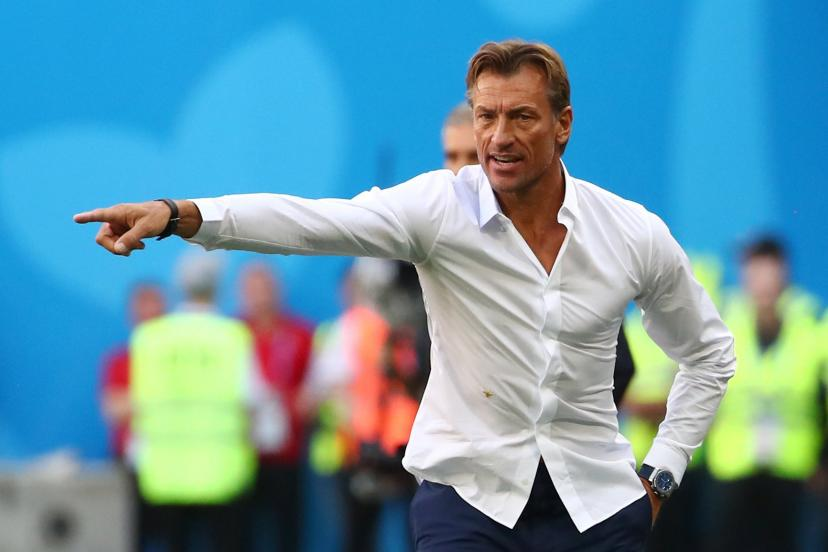
What Hervé Renard was called for is much more immediate: to provoke an electric shock. To restore pride to a wounded team. To turn doubt into revolt. And when it comes to succeeding in this type of commando mission, few coaches have a track record as convincing as that of the man in the famous white shirt.


