

The crisis shaking Cameroonian football for several years continues to reveal its dark sides, and the latest revelations are once again controversial. In a recent media appearance, details emerged about the conflict between the president of the Cameroonian Footballers’ Union, Geremi Njitap, and the president of the Cameroonian Football Federation, Samuel Eto’o.
Invited to the show “Le Onze Entrant” on Jambo FM, hosted by Landry Lemogo, better known as “President Tchop Tchop”, Jacques Marcel Itiga, the communication officer of the National Union of Cameroonian Footballers (SYNAFOC), revisited a key episode that fueled the tension between these two figures in Cameroonian football. According to him, the turning point dates back to the 2022 World Cup held in Qatar, an event that crystallized some previously latent differences.
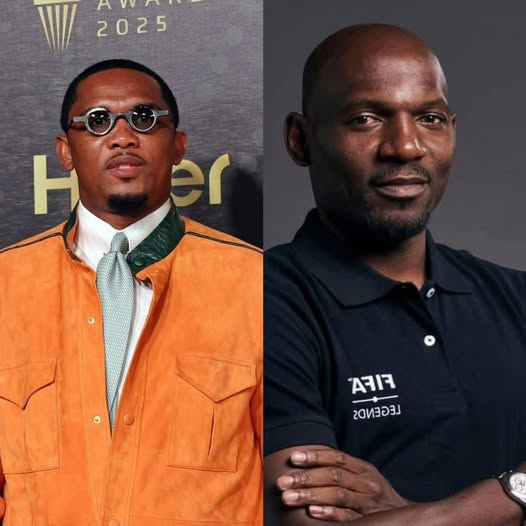
According to Jacques Marcel Itiga, the controversy began during a meeting organized by FIFPRO, the global footballers’ union, which Samuel Eto’o attended. The former Cameroonian international reportedly requested to meet with FIFPRO officials to discuss sensitive issues regarding the organization and management of African players. Among the topics raised were the rehabilitation of former Ivorian international Cyrille Domoraud and the revival of the Ivorian Footballers’ Association (AFI).
These requests, Itiga explains, were seen by FIFPRO as delicate, as they touched on the autonomy and sovereignty of the regional divisions of the organization. In response to Samuel Eto’o’s requests, FIFPRO’s management reacted firmly, reminding him that each regional section has decision-making independence and that it was not possible to impose changes without consultation and agreement from local bodies.
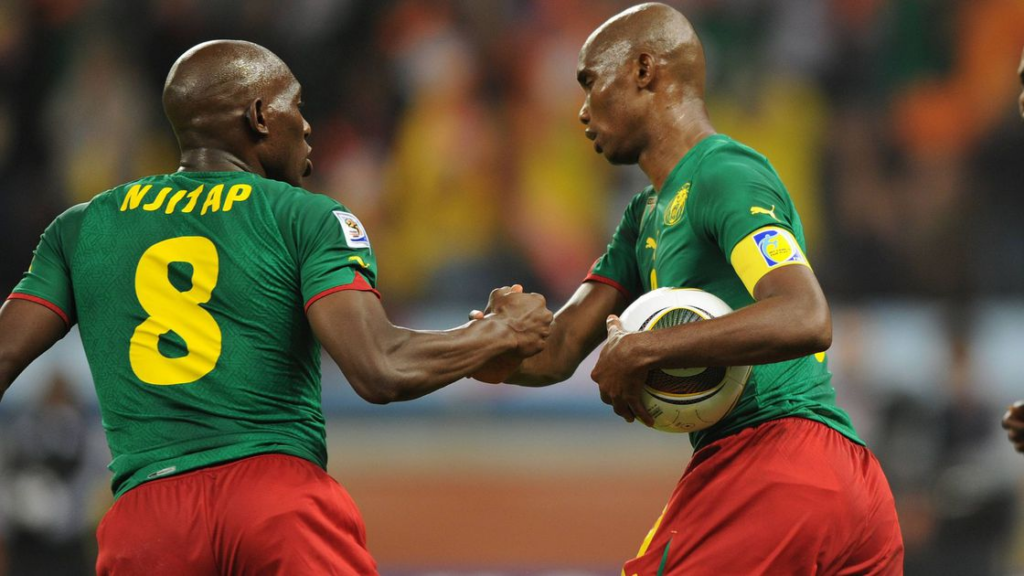
This stance, according to Itiga, marked the beginning of a series of tensions between Samuel Eto’o and Geremi Njitap. These tensions gradually crystallized around issues of governance and representation of Cameroonian footballers. What started as a technical and institutional conflict has turned into a public showdown, revealing structural difficulties and differing interests within Cameroonian football.
Through these revelations, the public gains a clearer understanding of the origins of a conflict that has long remained in the shadows and the stakes that go far beyond mere personal quarrels, shining a light on the challenges related to the governance of African football and the relationships between local and international actors.


