

The Algerian Football Federation has officially submitted a request to FIFA following their defeat against Argentina in the 2026 World Cup. This move comes amid a challenge to several controversial refereeing decisions deemed questionable by Algerian authorities. In its submission, the FAF seeks a reassessment of certain game actions that occurred during the match, believing they could have influenced the outcome. The document sent to FIFA relies on video sequences and technical observations made by the Algerian staff.
One of the main points raised involves an incident with Lionel Messi and Aïssa Mandi in the 32nd minute. According to the FAF’s account, the Argentine forward made a strong contact with the Algerian defender using his studs. However, the referee did not penalize the action, nor was it visibly reviewed by the video assistant. For the Algerian federation, this episode is a significant discussion point in evaluating the overall refereeing of the match.
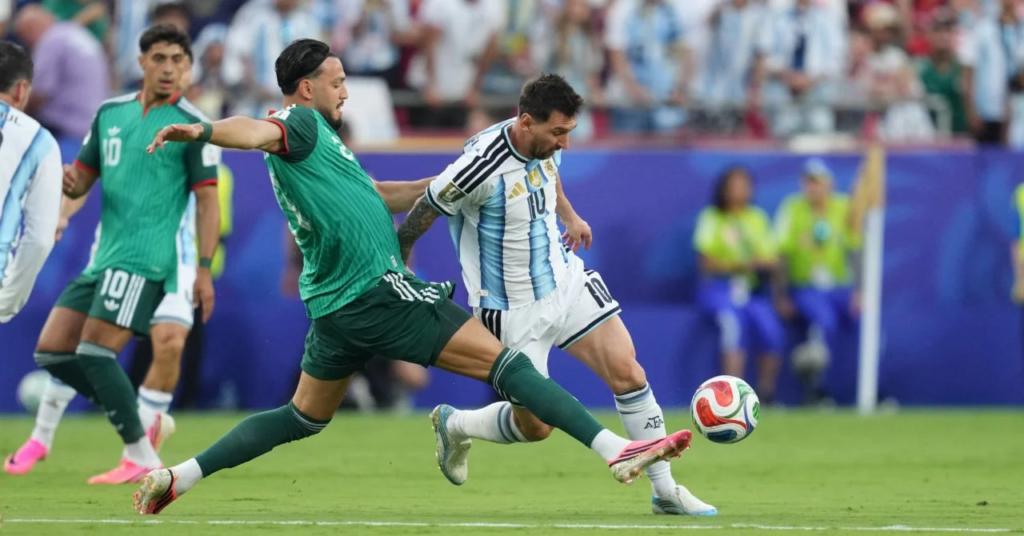
A second incident is also mentioned in the request to FIFA.
It involves Alexis Mac Allister and Maza, in an action where an elbow was allegedly thrown to the face of the Algerian player. Again, no disciplinary sanction was applied at the moment, raising questions from the Algerian side. The FAF believes this situation warranted a refereeing intervention, or even a review by the video assistant, to assess the potential severity of the action.
🚨🚨 THE ALGERIAN FEDERATION 🇩🇿 HAS CONTACTED FIFA AFTER ITS DEFEAT AGAINST ARGENTINA 🇦🇷 !
The FAF points out two controversial refereeing decisions:
👉 A Messi studs-up on Mandi in the 32nd minute, without sanction
👉 An elbow from Mac Allister to Maza’s face, not sanctioned… pic.twitter.com/YVDoRkgrWK
— Actu Foot (@ActuFoot_) June 19, 2026
In its argument, the FAF emphasizes the need for uniform application of the rules of the game, especially in high-stakes matches where every decision can be crucial. The Algerian body also highlights the importance of systematically using video assistant refereeing in ambiguous situations. It believes both reported actions should have undergone more thorough analysis during the match.
The procedure initiated with FIFA now aims to obtain an official study of the reported incidents. The international body may need to review the refereeing reports, match footage, and the elements provided by both parties. No communication has yet been made by FIFA regarding any potential disciplinary action or revision of the decisions taken during the match.


